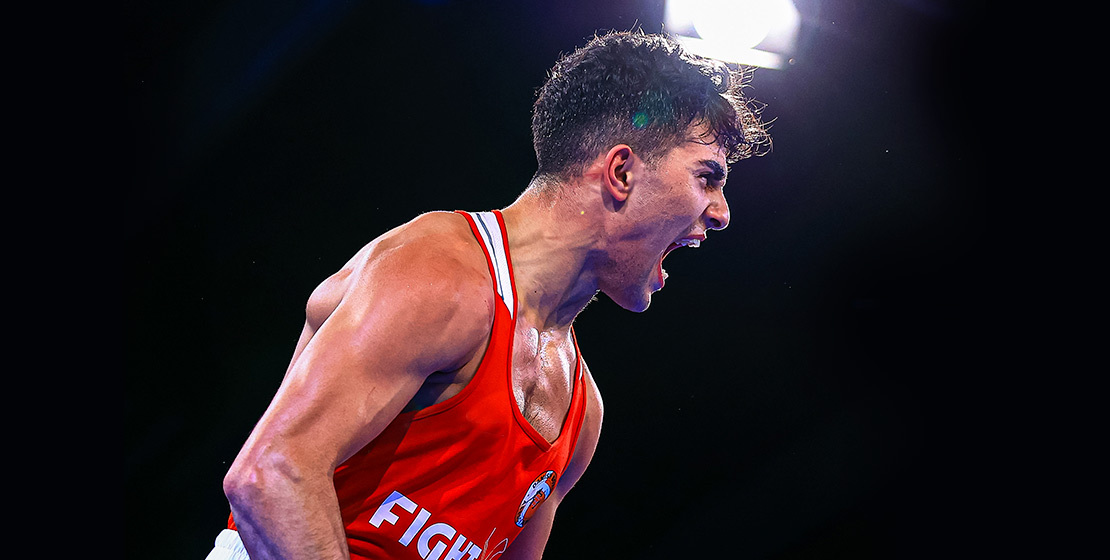

From school dropout to honorary doctorate: Manny Pacquiao’s lifelong pursuit of education
September 26th, 2026 / IBA
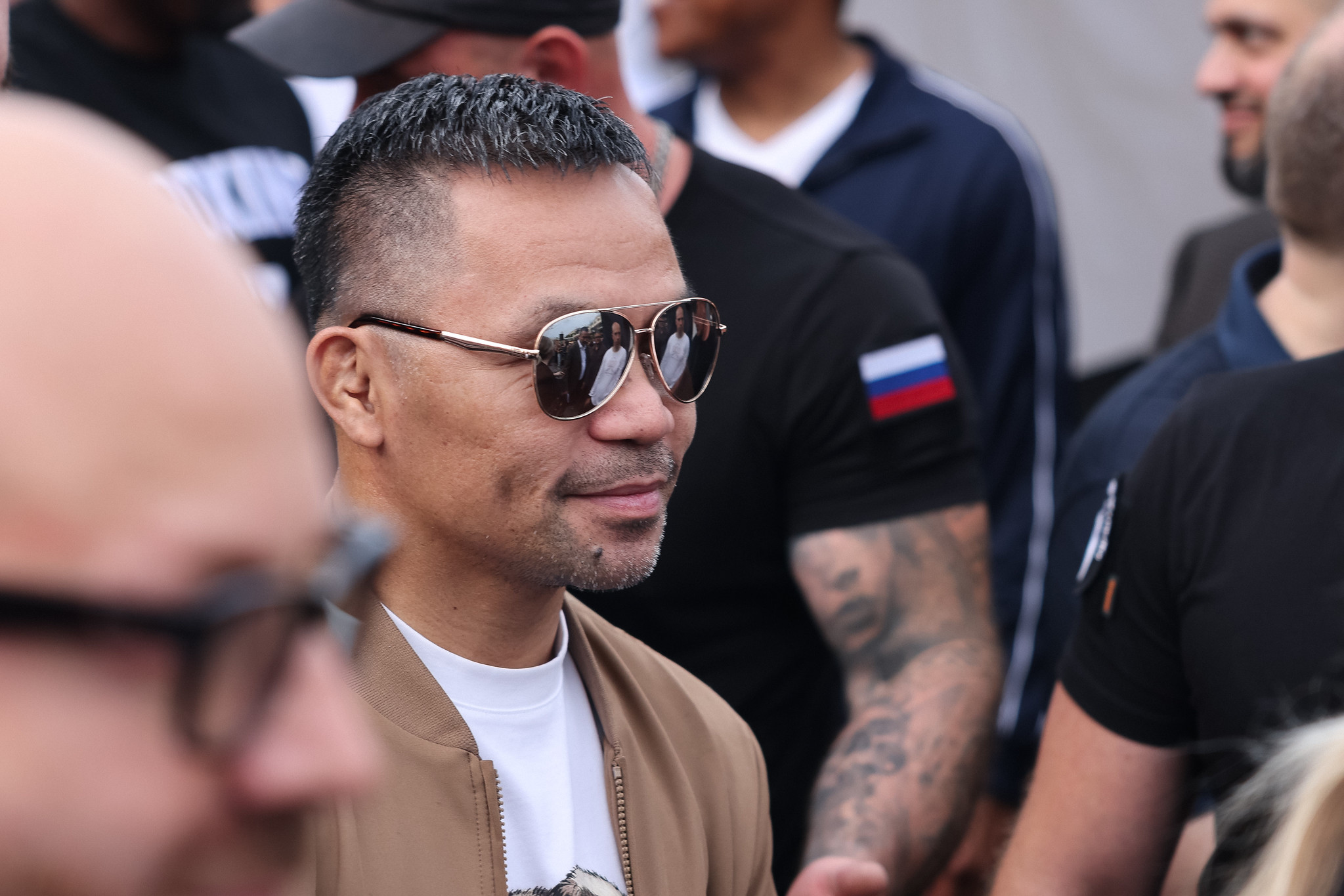
Manny Pacquiao, the eight-division world champion, Philippine senator and International Boxing Association (IBA) Vice President, has been awarded an honorary doctorate in recognition of a life that turned childhood poverty into one of the most remarkable stories in sport.
“Never give up. Great things take time and tremendous effort.”
— Manny Pacquiao
Few careers illustrate that principle better than the extraordinary journey of Manny Pacquiao.
The chances of a boy who grew up in extreme poverty, left school as a teenager and travelled to Manila in search of a better life eventually becoming an eight-division world champion, Senator of the Philippines, presidential candidate and IBA Vice President would appear almost impossible to calculate.
Yet boxing represents only one part of Pacquiao’s story. Alongside a career that made him one of the most recognisable athletes of his generation, the Filipino repeatedly returned to something that poverty had forced him to leave behind at an early age: education.
That journey reached another milestone on 16 September 2026, when Philippine Normal University (PNU) formally conferred on Pacquiao its first-ever Doctor in Physical Education and Sports, Honoris Causa, recognising his achievements in sport, his contribution to national pride and the example his life has provided to generations of Filipinos.
For a man who once had to abandon formal education simply to survive, the ceremony in Manila represented considerably more than another title to add to an already extraordinary collection.
Fighting his way out of poverty
Pacquiao’s childhood in the Philippines has become an inseparable part of his story. Growing up in severe poverty, he completed elementary school but was unable to continue his regular education as his family struggled financially.
As a teenager, he left for Manila and turned increasingly towards boxing as a means of supporting himself and his family. The conditions were a long way from the sophisticated training camps, major arenas and multimillion-dollar purses that would eventually define his professional career.
Boxing offered Pacquiao a route out of poverty, but the experience of growing up with very little remained fundamental to the way he viewed success long after he had become wealthy and famous.
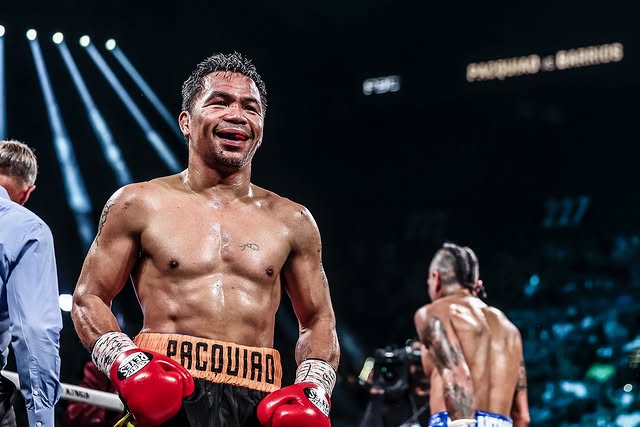
Over the years, Pacquiao devoted a significant part of his resources to charitable projects in the Philippines. His foundation has supported housing projects and vulnerable communities, while Pacquiao himself has repeatedly linked his philanthropy and public service to his own experience of poverty.
The same background also shaped his attitude towards education. Success in boxing had solved the immediate problems that forced him to leave school, but it did not remove his desire to complete what he had started.
Returning to the classroom as a world champion
By 2007, Pacquiao was already one of the biggest stars in boxing. He had won world titles, fought some of the leading names of his era and established himself as a national sporting hero in the Philippines.
At the age of 28, however, he returned to an objective that had nothing to do with another championship belt.
In February 2007, Pacquiao took the Department of Education’s Accreditation and Equivalency Test under the Alternative Learning System. After passing the examination, he was formally recognised as a high school graduate and became eligible to pursue higher education.
There was something unusual about the image: a boxer who had already reached the summit of international sport going back to complete an educational qualification that most people receive before their professional careers have even begun.
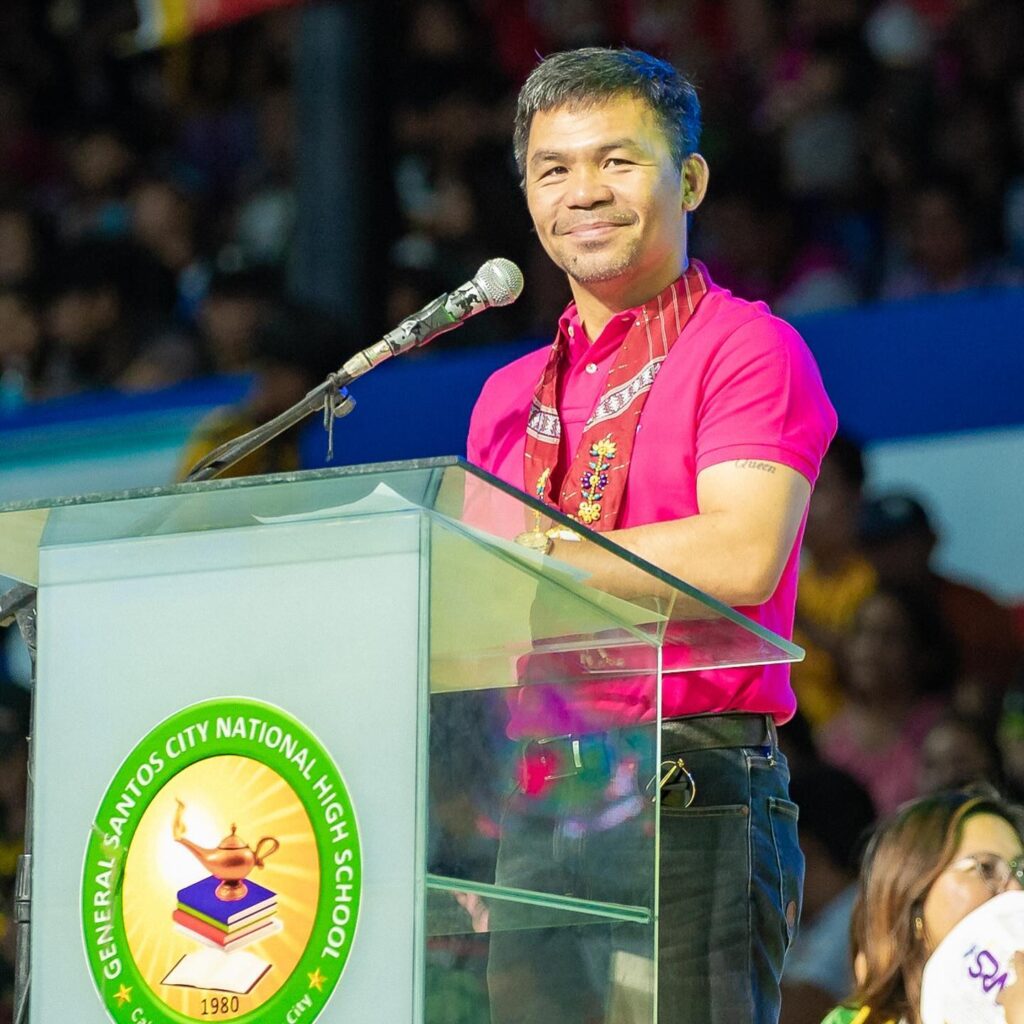
For Pacquiao, however, it became another example of the discipline that had defined his boxing career. Training, fighting, business and eventually politics did not prevent him from continuing his studies.
In 2019, he graduated from the University of Makati with a Bachelor of Arts in Political Science, majoring in Local Government Administration. By that stage, Pacquiao had already served in the Philippine House of Representatives and had been elected to the Senate, making education directly relevant to a second career that was developing alongside his achievements in boxing.
Three years later, after his first presidential campaign, he completed a Master in Management, majoring in Public Administration, at Philippine Christian University.
Pacquiao was 43.
“It is never too late to dream bigger dreams,” he said after completing the programme.
The progression was remarkable. The teenager who had been forced out of school by poverty had returned first to complete his secondary education and then continued through undergraduate and postgraduate study while simultaneously building careers in sport and public service.
Another title, with a different meaning
The latest recognition came from Philippine Normal University, the country’s National Center for Teacher Education.
PNU formally conferred on Pacquiao the degree of Doctor in Physical Education and Sports, Honoris Causa, on 16 September 2026. The honorary doctorate was awarded in recognition of his sporting achievements and contribution to Philippine sport, as well as the broader influence of a life that the university described as an example of how sport can become a vehicle for personal transformation, social mobility and national pride.
It is important to distinguish the honour from an earned academic doctorate: Pacquiao did not complete a doctoral programme or defend a dissertation. The degree was awarded honoris causa by the university in recognition of his contribution and achievements.
For Pacquiao himself, that distinction did not diminish its significance.
“For me, this honorary doctorate is not simply a recognition of what I have achieved. It is a reminder that every blessing comes with a responsibility to give back, to serve, and to help others rise,” he said during the ceremony.
The message was consistent with the way Pacquiao has increasingly spoken about his achievements outside the ring. His success gave him wealth and influence, but he has repeatedly argued that their value ultimately depends on how they are used.
PNU reached a similar conclusion when explaining its decision. Pacquiao’s importance to Philippine sport, the university noted, extended beyond victories and championships. His journey demonstrated how sporting excellence could change the trajectory of a life and, in turn, create opportunities to influence the lives of others.
Boxing and education
Pacquiao’s academic journey also challenges one of the oldest stereotypes attached to boxing: the idea that intellectual development and fighting somehow belong to separate worlds.
In reality, the history of the sport offers numerous examples of boxers who pursued demanding academic careers alongside success in the ring.
British former light-heavyweight world champion Nathan Cleverly graduated from Cardiff University with a degree in Mathematics while building his professional boxing career. American Chris Algieri, a former WBO junior-welterweight world champion who later shared the ring with Pacquiao himself, earned a bachelor’s degree in healthcare management before completing a Master of Science in Clinical Nutrition.
The Klitschko brothers also combined elite boxing with academic study, with both Vitali and Wladimir earning advanced academic qualifications in sports science.
Perhaps one of the most unusual examples was American heavyweight Harold “Hackie” Reitman. An orthopaedic surgeon as well as a professional boxer, Reitman spent years balancing medicine with heavyweight boxing. He eventually recorded 13 professional victories while continuing his medical career, earning the nickname “The Boxing Doctor”.
Their fields could hardly be more different – mathematics, nutrition, medicine, public administration and sports science – but their stories underline a point that is sometimes lost beneath boxing’s physical nature.
At the highest level, boxing demands far more than the ability to punch.
A boxer must process information under pressure, recognise patterns, make tactical adjustments in fractions of a second and maintain extraordinary discipline over months and years of preparation. The consequences of a poor decision can be immediate, which is one reason boxing has long been known as the “Sweet Science”.
Those qualities do not automatically make every boxer an academic, but neither are sporting intelligence and intellectual curiosity contradictory.
Pacquiao’s story provides an unusually vivid example.
The education never stops
Even now, it is difficult to say which chapter of Pacquiao’s career should be considered closed.
In July 2025, at the age of 46 and after almost four years away from professional boxing, he returned to challenge American Mario Barrios for the WBC welterweight title. The fight ended in a majority draw, with two judges scoring it 114-114 and the third giving Barrios a narrow 115-113 victory.
Pacquiao did not regain the world title, but simply remaining competitive over 12 rounds against a reigning champion 16 years his junior demonstrated why definitive statements about what he can and cannot still accomplish have so often proved unreliable.
His public career has been similarly unpredictable. After serving in both houses of the Philippine Congress, Pacquiao ran for president in 2022 and has continued to play a role in public life. In boxing, he currently serves as an IBA Vice President, bringing the experience accumulated over decades at the highest level of the sport into its administration.
What happens next – whether in boxing, public service or elsewhere – remains open.
What is already established is the distance Pacquiao has travelled. He left formal education because poverty gave him little choice, then returned to it after becoming a world champion. He completed his secondary education at 28, earned a university degree while serving in public office, obtained a master’s degree in his forties and has now received an honorary doctorate recognising a lifetime of achievement in sport and service.
For someone whose earliest opportunities were defined by what his family could not afford, education eventually became another area in which Pacquiao refused to accept that the circumstances of his childhood should determine the limits of his future.
Boxing taught him how to absorb pressure, adapt and continue moving forward. His life outside the ring suggests that he learned to apply much the same philosophy elsewhere.
The belts will always form part of Manny Pacquiao’s legacy. So will the eight weight divisions, the great fights and the nights when an entire country stopped to watch him.
But the diploma he received in Manila in September tells another part of the story: the boy who had to leave school never stopped learning.