
“The ring is my home”: legendary Kostya Tszyu turns 57
September 19th, 2026 / IBA
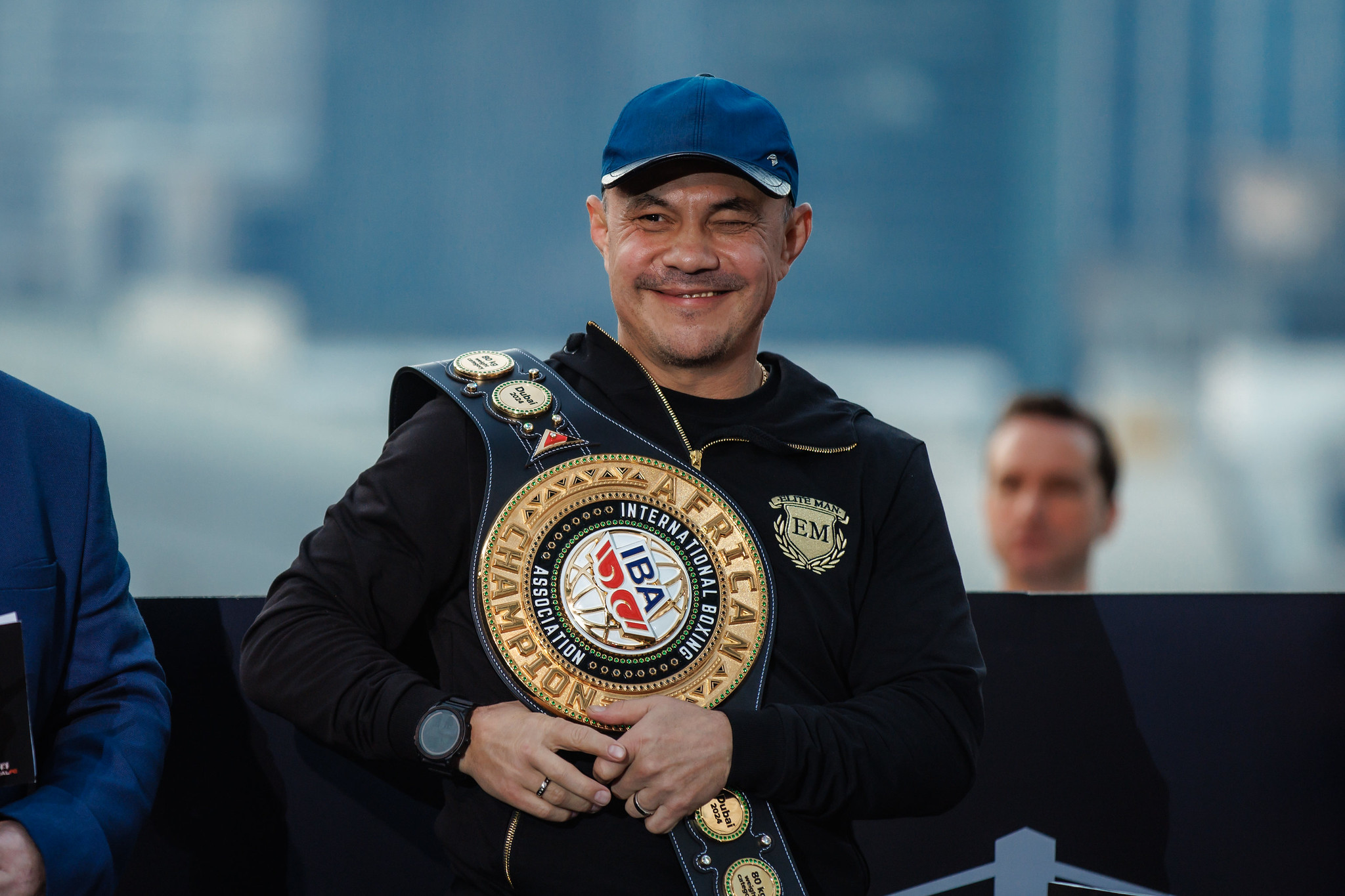
On his 57th birthday, Kostya Tszyu spoke to the International Boxing Association (IBA) about a career forged through relentless training, ice-cold calculation and a refusal to accept defeat – and about what today’s generation of champions could still learn from it.
“The ring is my home. I control everything that happens in it – every decision made there is mine, not my opponent’s.”
— Kostya Tszyu
Life offers no shortage of examples of people achieving success and global recognition against every obstacle imaginable. But reaching those heights comes at the cost of total self-sacrifice – putting everything you have, and then some, on the altar of victory. The story of a boy from the small Ural town of Serov is a vivid illustration that living life at full stretch is about far more than boxing alone. Radical maximalism in the gym and in the ring goes on to define the path a person walks, clearing away every obstacle along the way. This is the story of undisputed world boxing champion Kostya Tszyu.
“You know what boxing taught me? To calculate absolutely everything, down to the last detail. That’s what allowed me to build a programme that teaches people to work out their next move – any move. The way I used to calculate things in the ring, I now calculate them in everyday life too. Here’s an example: imagine you’re driving and you have an accident. What do you do? If you can work that out in advance – exactly what you need to do the moment it happens, where to put your hands, where to tuck your head, where to pull your knees, how to brace yourself – then, and only then, do you give yourself a better chance, an extra chance to survive,” Tszyu told IBA in an interview.
A fighter shaped against the odds
Tszyu’s maximalism showed itself early, from the moment he took up boxing at just nine years old. He ended up in the hands of the legendary coach Vladimir Cherni, who was asked to channel the boy’s restless energy in the right direction – and shaped him into one of the most feared fighters of his generation. What makes the story even more remarkable is that young Kostya had almost none of the physical attributes associated with boxing: he was short, with short arms. But together, he and Cherni built a unique style based on hard counter-punching and immaculate timing. None of it would have been possible without punishing, relentless work.
Stories about Tszyu’s training sessions are still told today. He constantly tested his own limits, driving himself to total exhaustion and then pushing for one more rep when his body had nothing left to give – a principle Muhammad Ali was known to share. Later in his career, Tszyu trained and prepared decorated boxers including Denis Lebedev and Alexander Povetkin for their own fights. Both men described the loads he put them through as sheer torture, and there was always a bucket in the gym in case someone’s body gave out mid-session.
No such word as “can’t”
Tszyu lost his very first contest. But, as would happen many times throughout his career, he came back stronger and simply started winning. As he himself used to say, there is no such word as “can’t” – only “can, but not yet.” His credo was to win, always: perhaps not straight away, but always, eventually, achieving whatever he set out to do.
Every detail mattered. Before a fight, Tszyu studied his opponents with meticulous care, pen and notebook in hand, noting the smallest details of how they worked and building his fight plan around them. As he put it himself, he could step into the ring and box with his eyes closed, because he knew exactly what his opponent was going to do.
Never say die
Giving up was never part of Tszyu’s vocabulary, and one story from his career illustrates that better than any other. Shortly before the Olympics, during a training camp, a serious accident nearly ended his chances of competing before he even got there. A large pane of glass shattered near one of his teammates, and a sharp shard came down like a guillotine blade, heading straight for his head. Tszyu’s reaction was instant – in a single leap, he threw himself towards his teammate and knocked the falling glass away with his hand. The result was a severed finger, just 22 days before the Games.
Withdraw from the tournament? Never. Within a short time, Tszyu had the cast off and was back sparring, though he had to rebuild much of his tactics around his right hand – the hand that would go on to drop opponent after opponent. It still was not enough for a medal: Tszyu lost to East Germany’s Andreas Zülow, the eventual Olympic champion, a fighter he would later dismantle with ease in a rematch.
A style all his own
Tszyu’s style was recognisable across the world, but he also liked to stand out – not only in how he fought, but in how he looked. That is where his famous braid came from, a look that became a lasting trend and one that many young boxers still copy today as a tribute to their idol.
Tszyu continues to share his experience with the next generation, and he has plenty to pass on beyond what happens inside the ropes. He knows first-hand what it means to go through brutal weight cuts, having shed more than 20 kilograms before fights. He also knows exactly what it takes to stare an opponent down face to face – by his own admission, he had already broken most of his opponents before a single punch was thrown, and only two or three men who locked eyes with him were ever able to fight him on even terms afterwards.
Turning defeat into destiny
Everyone knows that a true champion is defined not so much by their victories as by how they handle defeat, and what they learn from it. The loss to Winky Wright was a genuine blow to everyone around him, and above all to Tszyu himself, who seriously considered walking away from the sport. But his love for boxing, for competition, and his desire to prove to himself that this was far from the end, won out.
What followed was a triumphant return and a legendary win over the fearsome Zab Judah, left reeling from Tszyu’s clean, unstoppable right hand. The undisputed world title followed, along with several successful defences. This is the story of a boy from a small town who made it – and one that will go on inspiring boys and girls for years to come.
Tszyu on today’s fighters
Tszyu marked his birthday the way he always does – in good health and good spirits, starting the day, as he has for many years, with his morning workout. He compared today’s generation of champions with the fighters he beat during his best years.
“Back when I was competing – for almost my entire career, apart from my very last fight – I went into every bout ready to die for the win. That total, 100 per cent commitment is what separates us from today’s generation. Everyone is more pragmatic now, more guarded, and for a lot of fighters the word ‘finances’ comes before everything else. In my day, I fought for my flag, and I was proud of that. Some of that has come back now, but only to a certain extent – there isn’t the same relationship with the sport that there was in my time.”
And what if you imagine peak Kostya Tszyu against a peak Gervonta “Tank” Davis – who wins?
“I’d compare Davis to Zab Judah a little bit, so it would probably end the same way,” he said, laughing.